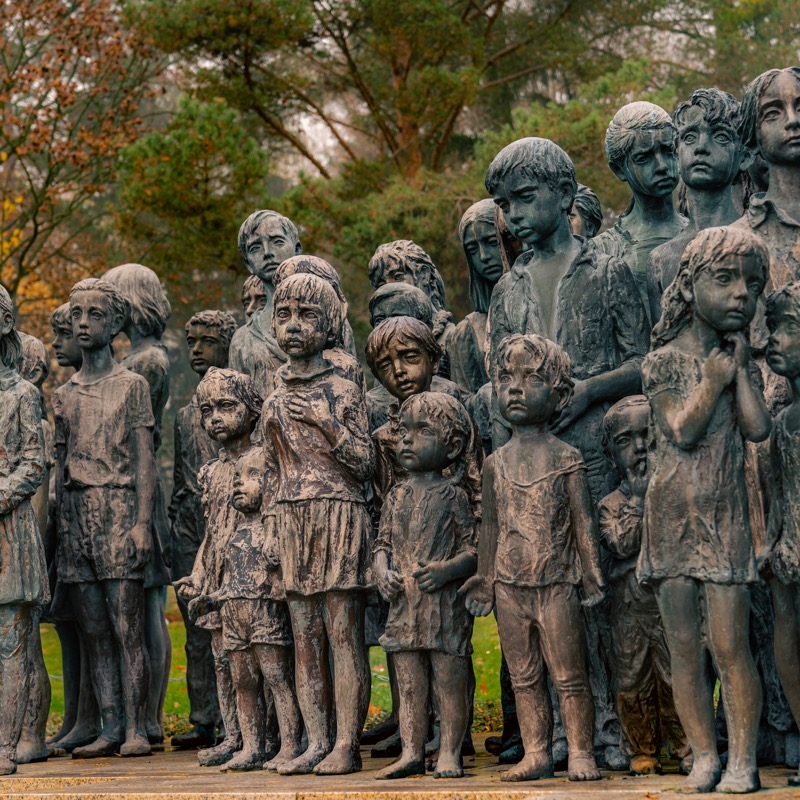


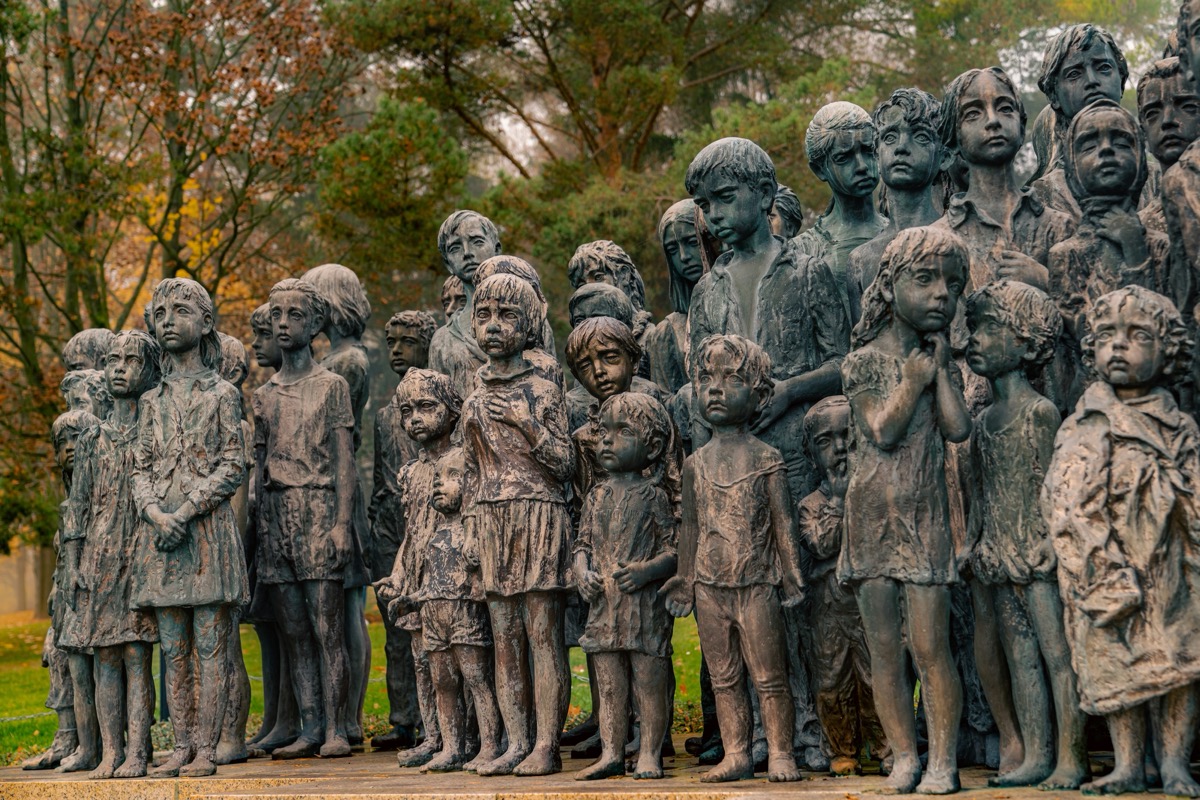
The Lidice Memorial stands on the site of a village that no longer exists. On 10 June 1942, in reprisal for the assassination of Reinhard Heydrich, the Nazi occupiers shot the men of Lidice, deported the women and children and razed the village. The memorial, about 20 km west of Prague, keeps the memory of the 503 people who lived here and of the 340 who were murdered.
Today the site holds the memorial grounds with the Memorial to the Child Victims of War, a museum, the Lidice Gallery, house no. 116 and the Rose Garden. Below are the history, the opening hours and admission for 2026, the languages of the audio guide and guided tours, and the practical side of a visit by private car from Prague. Facts, hours and prices come from the official website of the Lidice Memorial.
Quick Facts: Lidice Memorial
- Where: Lidice, Central Bohemia, about 20 km west of Prague
- Open (2026): Museum, gallery and house no. 116 daily 9:00–17:00; closed 23 Dec–1 Jan; grounds and Rose Garden all year
- Admission (2026): Adults 150 CZK, reduced 70 CZK for the museum and gallery; grounds and Rose Garden freely accessible per the visitor rules
- Time to allow: 1.5 or 3 hours (the two routes suggested by the memorial)
- Languages: Free audio guide for the grounds in English, German and Czech (per izi.travel); guided tour in English ordered from the memorial
- Parking: Paid car park by the museum, free car park by the gallery
What happened in Lidice in 1942
Lidice was a mining village near Kladno with 503 inhabitants. On 27 May 1942 Czechoslovak parachutists mortally wounded Reinhard Heydrich, the acting Reich Protector. A vague letter led the Kladno Gestapo to the Horák family of Lidice, whose son served in the Czechoslovak army in Britain. House searches found no weapons, no transmitter and no evidence of any link to the assassination. The occupiers wanted an act of revenge, and they chose Lidice.
In the early hours of 10 June 1942 the village was sealed off. On the orders of K. H. Frank, 173 men were shot in the garden of the Horák farm. The women and children were taken to a school gymnasium in Kladno, where after three days the children were separated from their mothers. Apart from a small number selected for Germanisation and infants under one year, the children were murdered by exhaust gas in specially adapted vehicles at the Chełmno extermination camp in occupied Poland. The women were sent to the Ravensbrück concentration camp.
The houses were burned and blown up; the church and even the cemetery were destroyed. By 1943 nothing was left but a bare plain. In all, 340 people from Lidice were murdered. After the war 143 women returned, and after a two-year search 17 children were found and brought back to their mothers. In 1947 the foundation stone of a new Lidice was laid 300 metres from the original site.
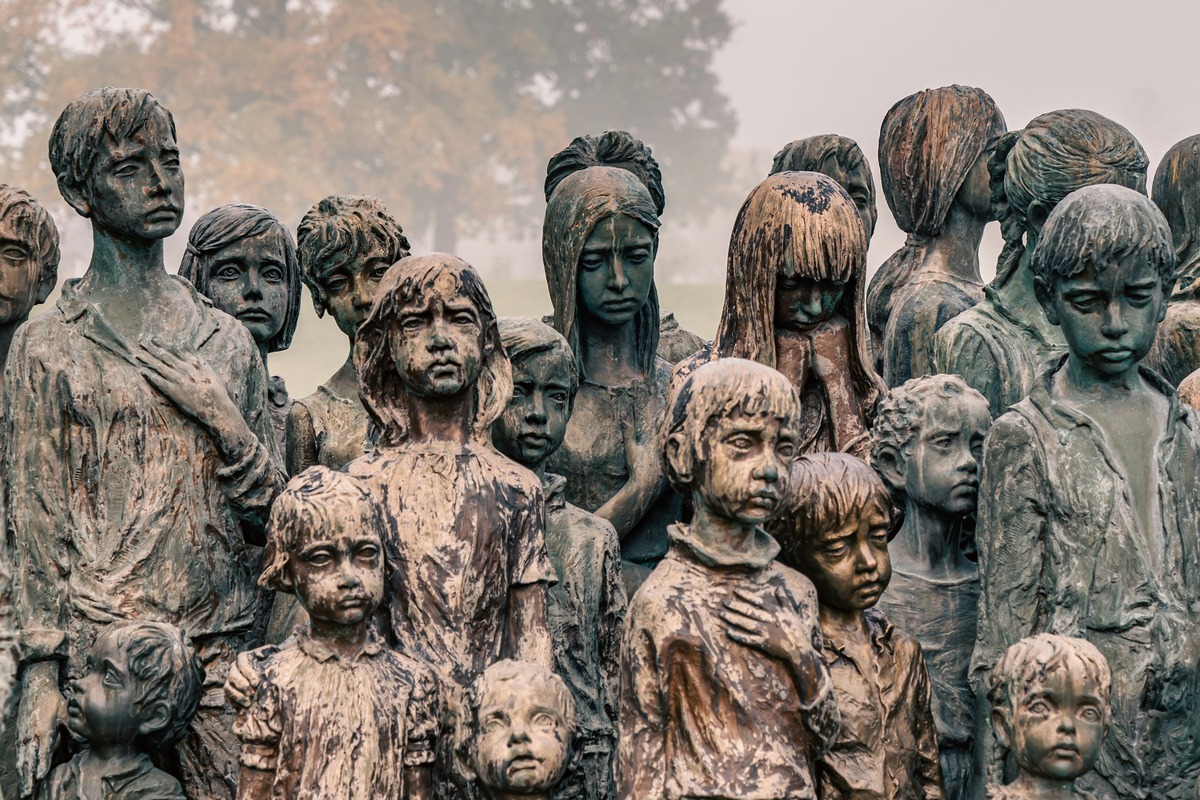
The memorial today: what the site contains
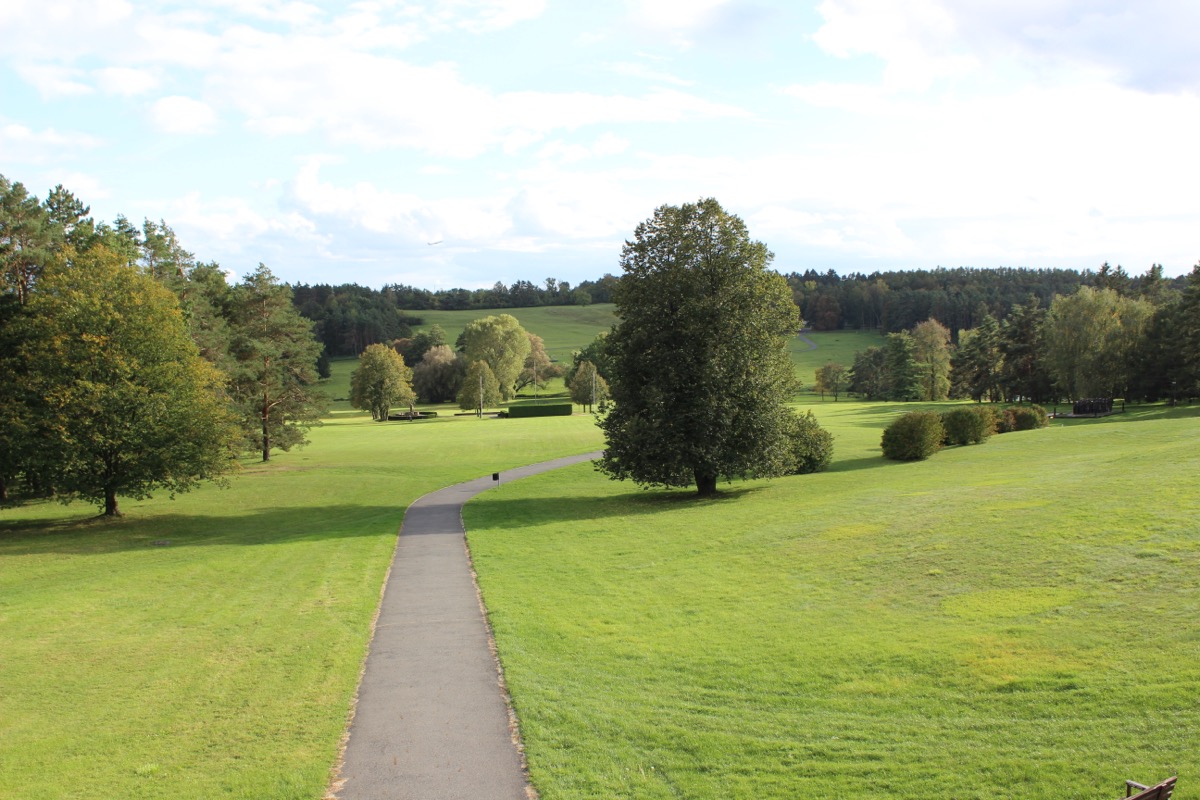
The site of the old village is a national cultural monument (since 1995), laid out as memorial grounds with marked paths; the museum, gallery and Rose Garden stand at its edges. The main places are:
- Memorial grounds (the reverent area) – the common grave of the Lidice men with a statue of a mourning woman (Bedřich Stefan), the foundations of the church with a statue of a woman shielding her face from the flames (Karel Lidický), the foundations of the school, the foundations of the Horák estate and the old graveyard.
- Memorial to the Child Victims of War – 82 bronze figures of children, 42 girls and 40 boys, by the sculptor Marie Uchytilová, who worked on the group from 1969 until her death in 1989; it was placed here between 1995 and 2000. Visitors are asked not to enter the protection zone around it.
- Museum – since 2006 it has housed the multimedia exhibition “And Those Innocent Were Guilty…”, which shows everyday life in pre-war Lidice through family photographs, the destruction of the village and its rebuilding. Two halls next to it, Underneath the Tribune and In Memoriam, show temporary historical exhibitions and are free to enter.
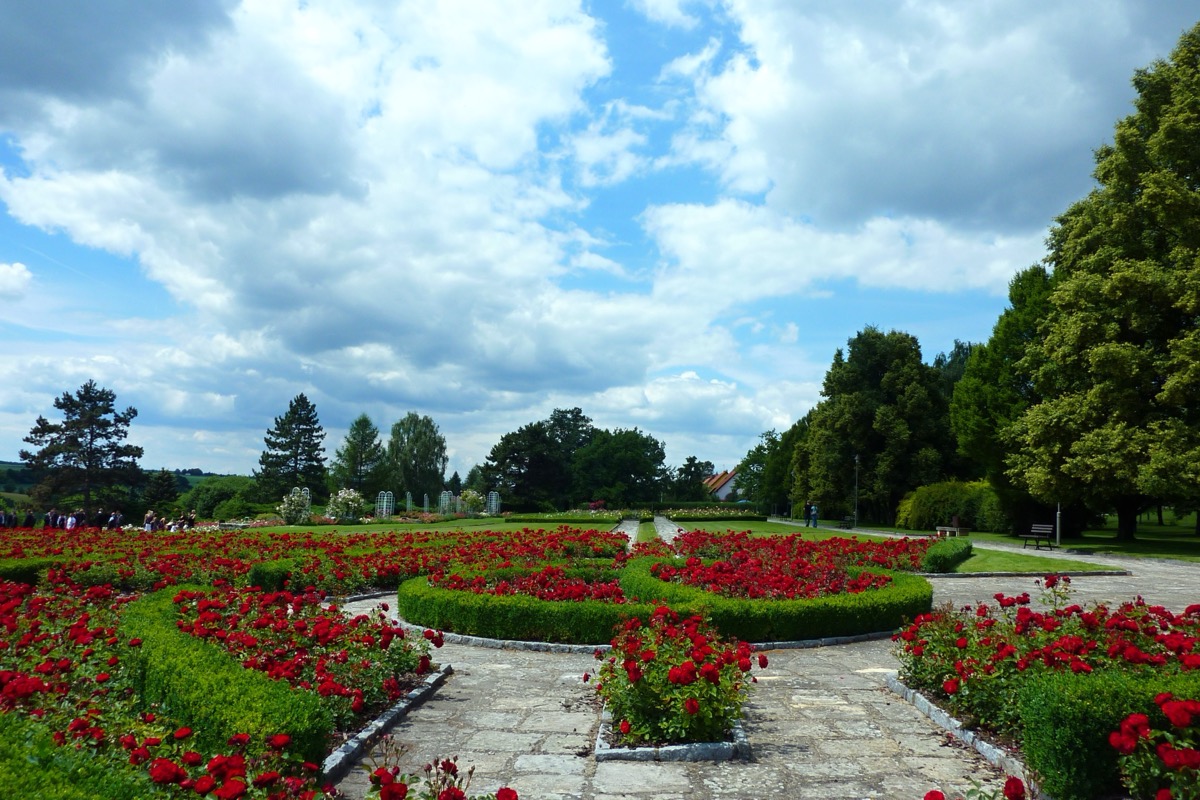
- Rose Garden – founded in June 1955 as the Garden of Peace and Friendship on the initiative of Sir Barnett Stross and the British “Lidice Shall Live” campaign, with roses donated from many countries. It lies between the old and the new village and today holds 240 varieties and more than 24,000 bushes.
- Lidice Gallery – the Lidice Collection of modern art, begun in 1967, and temporary exhibitions including the annual International Children’s Exhibition of Fine Arts Lidice; there is a restaurant in the building.
- House no. 116 – one of the original houses of the new village, with the exhibition “We Are Building a New Lidice”: a flat furnished as it was around 1960 and panels on the post-war rebuilding.
How long to allow and in what order
The memorial suggests two routes: about 1.5 hours for the museum, the grounds and Rose Garden with the audio guide, and the gallery; or about 3 hours with the temporary exhibitions, a walk through the grounds with a guide of the memorial (ordered in advance from the memorial, not from us) and a walk through the new village. Either route can start at the museum or at the gallery, roughly 600 metres away.
Language: audio guide, guided tours and the exhibitions
The memorial offers a free smartphone audio guide on the izi.travel platform, one for the grounds and one for the gallery; according to izi.travel, the version for the grounds is available in English, German and Czech (the official website does not list the languages). Guided tours of the grounds must be ordered in advance through the memorial’s booking form; the 2026 price list gives 500 CZK for a tour in Czech and 800 CZK for English, German, French or Russian. We did not find a statement on the official website about the language of the museum’s permanent exhibition, so if that matters to you, ask the memorial before your visit. We do not book the memorial’s guided tours or tickets; you order them directly with the memorial.
Opening hours and admission 2026
- Museum, Lidice Gallery and house no. 116: daily 9:00–17:00 all year; closed from 23 December to 1 January (hours valid from 1 January 2026).
- Memorial grounds and Rose Garden: open all year round.
- Admission: adults 150 CZK; children up to 15, students, visitors aged 65 and over and disabled visitors 70 CZK; family tickets 350–500 CZK. The ticket is paid in the museum or the gallery and is valid for both buildings and for house no. 116. According to the visitor rules, the grounds, the Rose Garden and the two temporary exhibition halls are freely accessible; the price list words this differently, so check on site. Payment cards are accepted in the museum.
- Free-admission days in 2026 listed by the memorial: 8 and 18 May, 1 and 13 June, 12 September, 28 October, 17 November.
- Checked on 2 October 2026. Opening hours and prices for 2027 had not been published at that time; check the current opening hours and prices before you travel.
Visiting with respect: the memorial’s rules
Lidice is a place of remembrance, and the visitor rules ask for behaviour that corresponds to it. Photographing and filming are prohibited in all exhibitions; eating and drinking are not allowed inside the buildings; visitors keep to the marked paths and stay out of the protection zone around the children’s memorial; dogs on a leash are allowed on the grounds except at the common grave of the men.
Practical information
- Address: Památník Lidice, Tokajická 152, 273 54 Lidice.
- Parking: a paid car park by the museum (50 CZK per day for a car) or a free car park by the gallery.
- Accessibility: wheelchair access to all public areas except the In Memoriam hall and house no. 116, where staff assist; the grounds and the Rose Garden are barrier-free.
- Food: fast-food stands at the car park and in the museum area; the Lidická galerie restaurant in the gallery building.
A private visit from Prague, and combining Lidice with Terezín
You travel in a private car with an English-speaking driver, up to eight people, from your Prague address. In the trip planner you set the length of each stop yourself, so you can stay as long as you need.
Lidice and Terezín both remember the German occupation of Bohemia and Moravia. Our Terezín and Litoměřice trip covers the Small Fortress, the Ghetto Museum and the town of Litoměřice. Lidice lies west of Prague and Terezín in northern Bohemia, so combining them is a full-day programme; Lidice can be added as a stop in the planner, which shows the total time of the day for the stops you choose. Allow enough time so that neither place is rushed. Our Krakow and Auschwitz trip goes further into the history of the Second World War over two days, with a night away.
For Lidice on its own, open the trip planner and type “Lidice Memorial” as a stop; the planner finds it under its address in Tokajická street. If you are unsure how to plan the day, write to us and we will check it against the opening hours.
Frequently Asked Questions
Where is the Lidice Memorial and how do I get there from Prague?
Is the Lidice Memorial open in winter?
Is there an English audio guide or guided tour in Lidice?
Can I visit Lidice and Terezín in one day?
Can I take photographs at the Lidice Memorial?
Photo credits: Rose Garden — Michal Ritter, Wikimedia Commons, CC BY-SA 3.0 (cropped); memorial grounds — Jan Polák, Wikimedia Commons, CC BY-SA 3.0 (resized).
Related articles
Prague in Winter: December, January & February
What Prague is like in January and February, winter opening hours, Masopust 2027, what to wear and four day trips by private car that work in the cold.
How Much Does a Private Day Trip from Prague Cost?
One price per car for up to 8 people: what a private day trip from Prague includes, what it does not, and what our ready-made trips cost.
Private Driver or Tour Guide in Prague: What’s the Difference?
What an English-speaking driver does on a day trip, what a licensed guide adds, and why our Prague walking tours come with a guide but no car.
Prague Christmas Markets 2026: Dates, Food & Tips
All 2026 dates of the Prague Christmas markets, what to eat and drink, Czech Christmas customs and how to combine the markets with a tour.
Houska Castle Day Trip from Prague: Legends, Facts and Opening Hours 2026
Houska Castle north of Prague: the gateway-to-hell legend and the documented history, 2026 opening days, tickets and how to add it to a Mělník and Kokořín trip.
Křivoklát Castle Day Trip from Prague: Complete Guide 2026
Křivoklát, the royal castle west of Prague: tour routes, verified 2026 opening days, prices and how to pair it with Karlštejn in one private car.
Which Day Trip from Prague? 5 Popular Trips Side by Side
Five popular day trips from Prague side by side: drive each way, length of the day, how much you walk, best season and who each trip suits.
American Airlines Prague Philadelphia 2026: Your Complete Prague Guide
American Airlines now flies direct from Philadelphia to Prague from May 21, 2026. Complete guide: private tours, top sights, and best day trips from Prague.


