
⏱ Reading time: 10 minutes
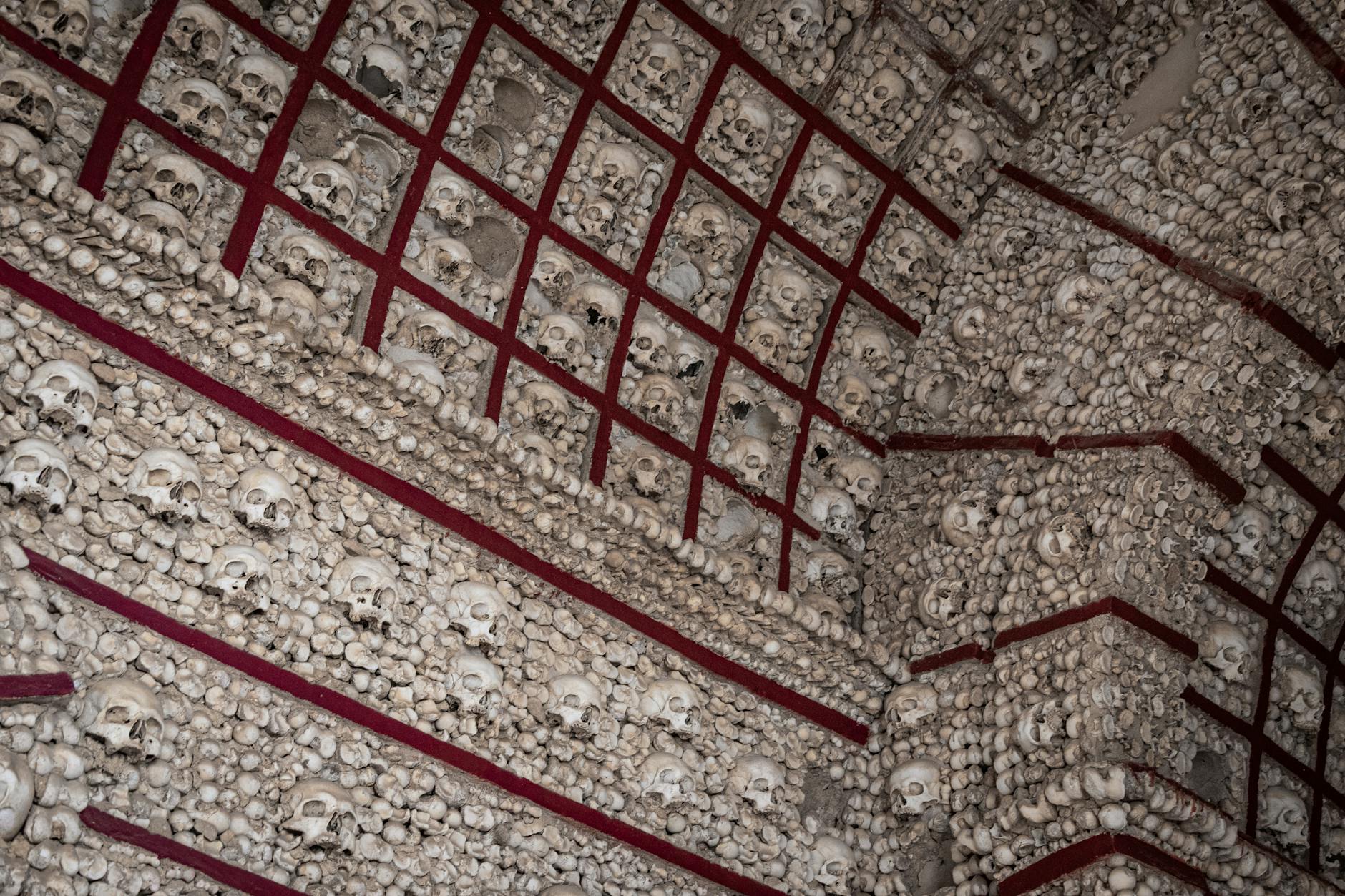
Of all the day trips from Prague, none quite prepares you for the Sedlec Ossuary. Step inside a quiet suburban church just outside Kutná Hora and you’re confronted with an interior unlike anything else in Europe — chandeliers made of human bones, garlands of skulls lining every arch, and pyramids of femurs stacked in the corners. It sounds macabre; it feels strangely serene. The remains of an estimated 40,000 people, victims of plague and war, have been arranged here with remarkable artistry since the late 19th century.
But the Sedlec Ossuary is only the beginning. The medieval silver-mining town of Kutná Hora — a private day trip favourite from Prague — is home to one of the most spectacular Gothic cathedrals in Central Europe, a royal mint with a fascinating history, and a beautifully preserved old town that earns its UNESCO World Heritage status every step of the way. Here is everything you need to plan the perfect day trip.
Plan your custom Kutná Hora day trip from Prague
What is the Sedlec Ossuary — and why visit?
The Sedlec Ossuary (Czech: Kostnice v Sedlci, often called the Bone Church) sits within the Cemetery Church of All Saints in Sedlec, a suburb of Kutná Hora. It is the most visited tourist attraction in the Czech Republic outside of Prague, and one of the most extraordinary religious sites in Europe.
The story begins in 1278, when the Abbot of the Sedlec Cistercian monastery returned from a pilgrimage to Jerusalem with a handful of soil from Golgotha, which he scattered across the monastery cemetery. The sacred earth attracted burials from across Central Europe. When a plague epidemic in the 14th century and then the Hussite Wars in the 15th century killed tens of thousands of people, the cemetery grew beyond all capacity. Bones were exhumed to make room and stored inside the chapel.
The transformation from storage room to spectacle came in 1870, when František Rint, a local woodcarver, was commissioned to arrange the bones artistically. What he created has astonished visitors for over 150 years: chandeliers containing every bone in the human body, a coat of arms of the Schwarzenberg noble family rendered in skulls and bones, four baroque bone pyramids in the corners of the nave, and the artist’s own signature — spelled out in bones above the entrance.
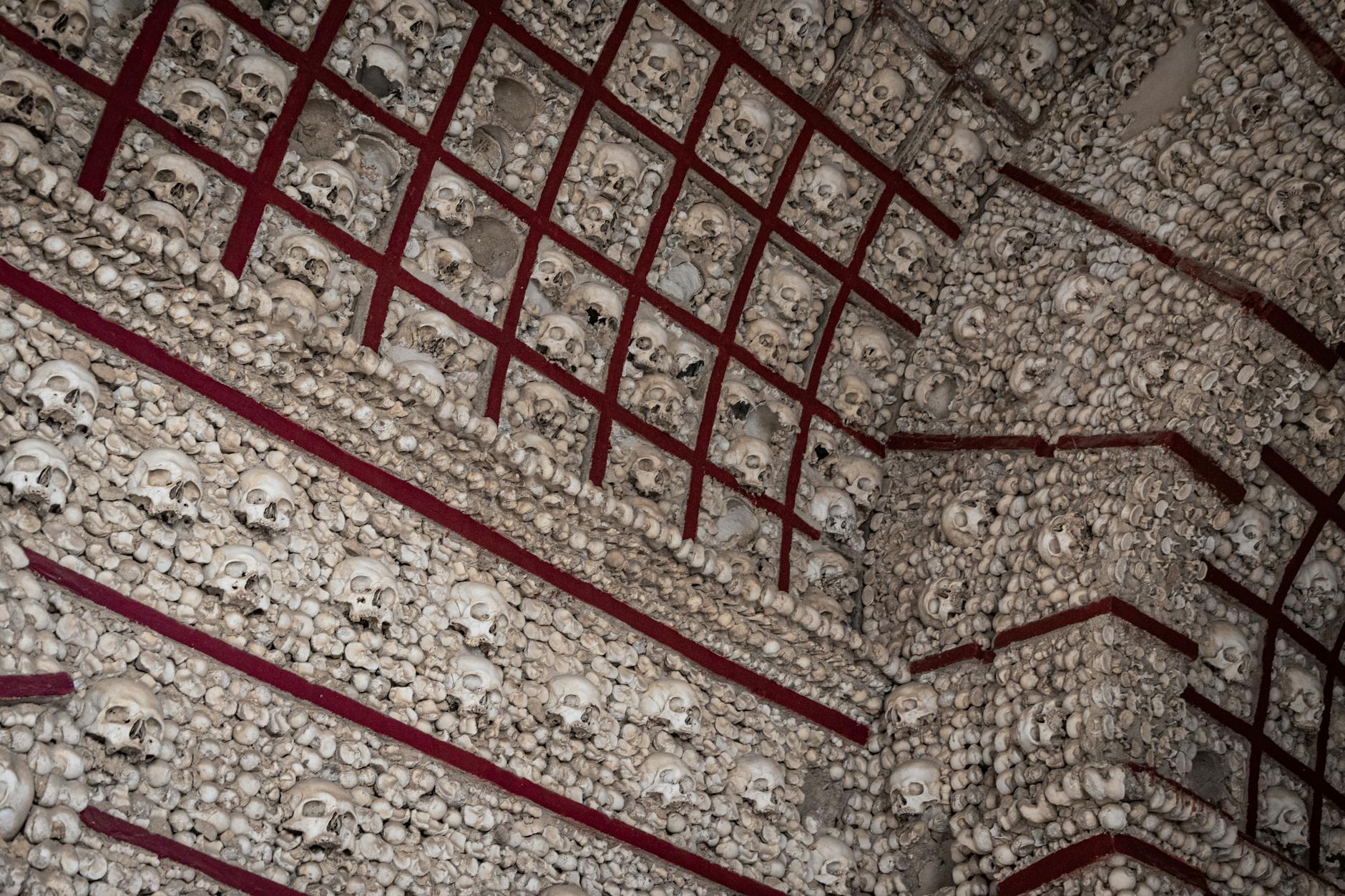
The iconic bone chandelier at Sedlec Ossuary, made from human bones
Photography is permitted (without flash) and the experience typically takes 30–45 minutes. The atmosphere is meditative rather than ghoulish — most visitors leave quietly reflective rather than disturbed.
Getting from Prague to Kutná Hora: your options
Kutná Hora lies approximately 70 km east of Prague. The journey is straightforward whichever mode of transport you choose, but the differences in comfort and flexibility are significant.
| Transport | Journey time | Approx. cost | Comfort | Notes |
|---|---|---|---|---|
| Private car / driver | ~75 min door to door | From €80 one way | ⭐⭐⭐⭐⭐ | Pick-up from your hotel; no connections |
| Train (direct) | 55–75 min (change at Kolín) | ~120 CZK (€5) | ⭐⭐⭐ | Kutná Hora hl. n. station is 3 km from town |
| Private day trip | All day, flexible | From €150/group | ⭐⭐⭐⭐⭐ | Guide, transport, tickets included |
One important logistical note: if you arrive by train at Kutná Hora hlavní nádraží, the Sedlec Ossuary is a 10-minute walk from there — but the town centre and St. Barbara’s Cathedral are a further 3 km. A private car or driver drops you directly at the Ossuary first, then takes you to each attraction without backtracking.
Top sights in Kutná Hora: beyond the Bone Church
First-time visitors often plan just the Ossuary and feel they’re done. In reality, Kutná Hora rewards a full day of exploration. Here are the must-see highlights.
St. Barbara’s Cathedral (Chrám sv. Barbory)
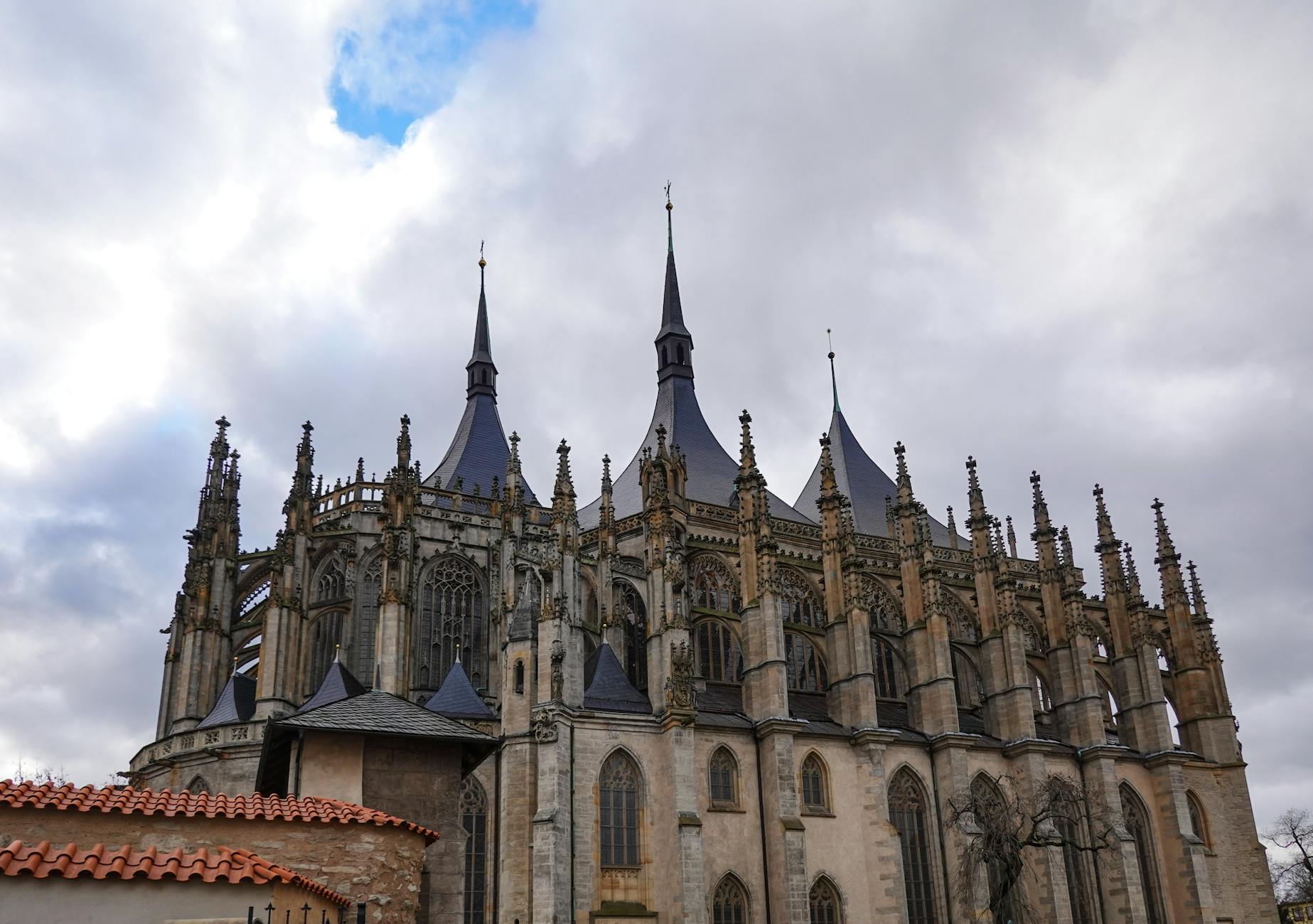
This is the showstopper. St. Barbara is the patron saint of miners, and this soaring late-Gothic cathedral was commissioned in the 14th century by the wealthy silver miners of Kutná Hora as a direct challenge to St. Vitus Cathedral in Prague. The three tent-like spires, the flying buttresses, and the luminous interior with its elaborate vaulted ceiling and medieval frescoes of mining scenes make this one of the most impressive Gothic buildings in Central Europe. UNESCO inscription: 1995. Allow 45–60 minutes.
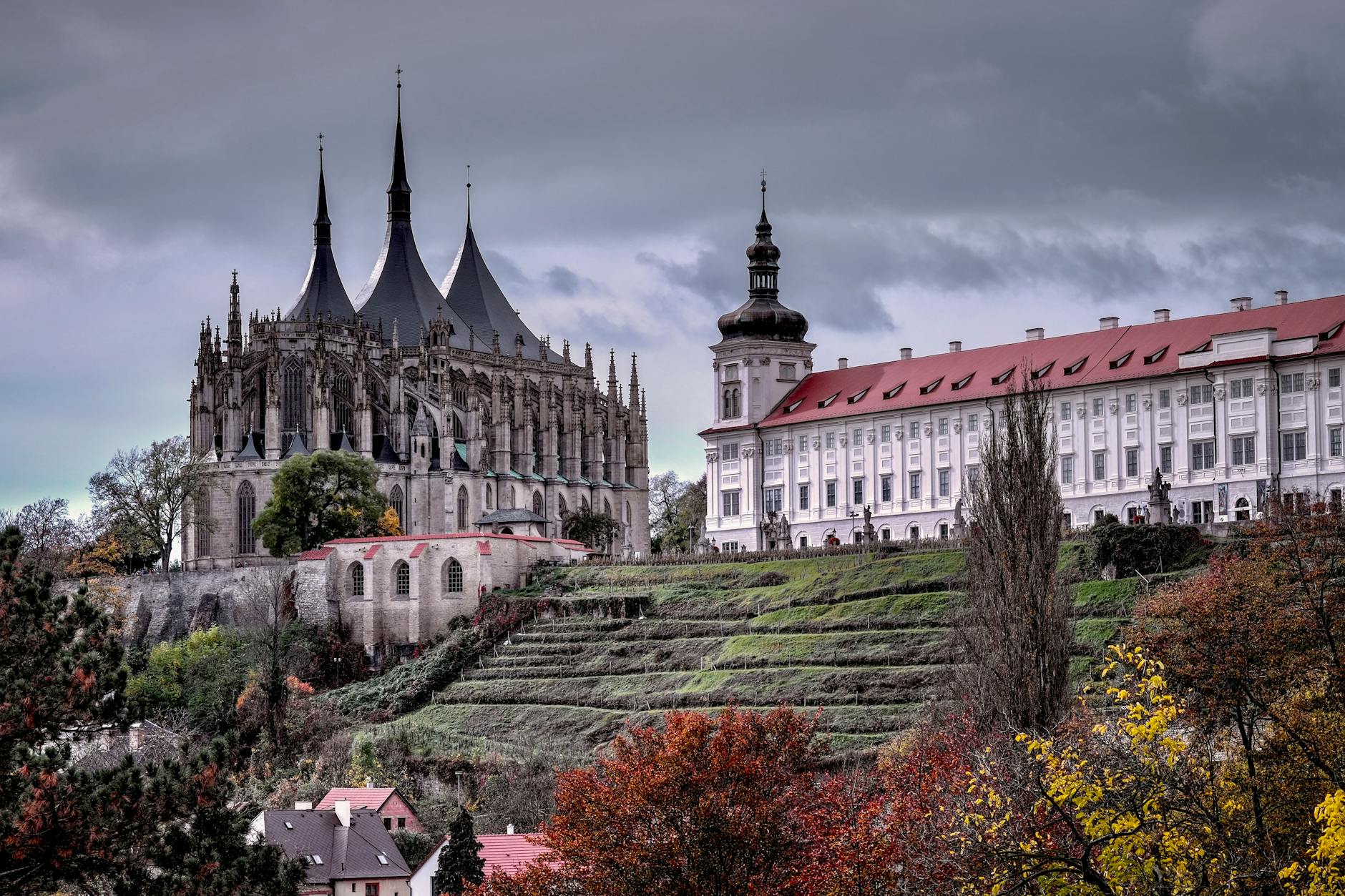
St. Barbara’s Cathedral and the Jesuit College in Kutná Hora — a UNESCO World Heritage Site
The Italian Court (Vlašský dvůr)
This former royal residence and mint was established by King Wenceslas II in 1300 and served as the most important mint in the Holy Roman Empire. For over 200 years, Prague groschen — the silver coins that dominated European commerce — were struck here. Today you can tour the royal chapel, the throne room, and the mint itself, seeing how coins were hammered from Kutná Hora’s famously rich silver seams. Allow 45 minutes.
The Silver Mine Experience (Muzeum stříbra)
Kutná Hora’s wealth came entirely from silver, and the Silver Mining Museum offers a genuinely immersive underground experience. Visitors don medieval miner costumes and descend into original 15th-century shafts to learn how miners worked by candlelight. The museum is excellent for families with older children. Allow 60–90 minutes with the mine tour.
Sedlec Cathedral (Katedrála Nanebevzetí Panny Marie)
Just next to the Ossuary, this Cathedral of the Assumption is one of the oldest Cistercian churches in Bohemia, dating to the 13th century. Its Baroque renovation by Jan Blažej Santini-Aichel in the early 18th century created a unique Gothic-Baroque fusion style. Quieter and less-visited than St. Barbara’s, it makes a perfect complementary stop.
Tickets, opening hours & practical tips
| Attraction | Adult ticket | Opening hours | Pre-book? |
|---|---|---|---|
| Sedlec Ossuary | 120 CZK (~€5) | Daily 9:00–18:00 (summer); 9:00–17:00 (winter) | Recommended Apr–Sep |
| St. Barbara’s Cathedral | 150 CZK (~€6) | Mon–Sun 9:00–18:00 (summer) | No, walk-in fine |
| Italian Court | 180 CZK (~€7) | Tue–Sun 10:00–18:00 | No |
| Silver Mine Museum | 200 CZK (~€8) with mine tour | Tue–Sun 10:00–17:00 | Recommended |
Spring (April–May) and early autumn (September–October) offer the most pleasant weather and smaller crowds. Summer weekends can be very busy at the Ossuary — arrive before 10:00 if possible. Weekdays are always quieter. When you book a private guided tour from Prague, your guide handles tickets and queue priority.
Full-day itinerary: Sedlec Ossuary + St. Barbara’s + town
Half-day (4–5 hours) — Ossuary + Cathedral
Depart Prague 8:30 → Arrive Sedlec 9:45 → Sedlec Ossuary (45 min) → Sedlec Cathedral (15 min) → Drive to town centre → St. Barbara’s Cathedral (60 min) → Lunch in old town → Return to Prague by 14:30.
Full day (7–8 hours) — Complete Kutná Hora experience
Depart Prague 8:30 → Sedlec Ossuary + Cathedral (60 min) → Italian Court with mint tour (45 min) → Lunch at a local restaurant → St. Barbara’s Cathedral (60 min) → Silver Mine Museum with mine tour (90 min) → Walk through the historic town centre → Return to Prague by 18:00.
Browse our Kutná Hora & Sedlec Ossuary private tours
Where to go next: popular day trips from Prague
The History Behind the Bones — Why 40,000 Skeletons?
The Sedlec Ossuary's bone decorations are so visually striking that they obscure the historical reasoning behind them. Understanding the history makes the visit more meaningful — and answers the question every visitor eventually asks: why did anyone think this was appropriate?
It begins in 1278 when the Cistercian abbot Henry returned from Jerusalem carrying a handful of soil from Golgotha (Calvary), which he spread on the Sedlec cemetery grounds. The news spread across Bohemia and Central Europe: burial at Sedlec meant burial in holy ground. The cemetery expanded dramatically. Then came the Black Death (1348), which killed a third of Europe, followed by the Hussite Wars (1420s), which brought more death to the region. Tens of thousands of bones accumulated in the ossuary beneath the Church of All Saints.
In 1870, a Czech woodcarver named František Rint was commissioned by the Schwarzenberg family (owners of the estate) to sort and arrange the bones artistically. Working with bones as his medium — as a craftsman would work with wood — Rint created the chandelier, the four pyramids, the family coat of arms, and the garlands of skulls that now line the chapel. He signed his work with bones arranged to spell his name in the corner.
This context matters: the ossuary isn't macabre for shock value. It's a medieval tradition of bone chapels (found across Catholic Europe from Portugal to Poland), executed at unusual scale by a Victorian craftsman who treated human remains with the same seriousness a sculptor would treat marble.
Photography at the Ossuary — What's Permitted
Photography is permitted inside the Sedlec Ossuary for personal use — a paid photography permit (approximately CZK 30) is required (included in some ticket packages). Flash photography is not allowed. The interior is dimly lit, which means wide-aperture lenses or phone cameras with good low-light performance produce better results than pop-up flash units.
The most photographed elements: the chandelier from directly below (requires positioning yourself in the nave and shooting up), the skull garlands along the arches, and the Schwarzenberg coat of arms on the right wall. The pyramids of bones in the four corners of the chapel are best photographed with a wide lens from the door. Arrive in the first 30 minutes after opening for the least crowded shots — by 10am tour groups fill the space.
You might also enjoy
- Best Day Trips from Prague 2026 — our full ranked guide to 12 top destinations within reach of the capital
- Kutná Hora complete visitor guide — detailed transport options, season-by-season tips, and everything you need to know
- Getting around Czechia in 2026 — trains, buses, private transfers compared
Why book a private Kutná Hora tour from Prague
Independent travel to Kutná Hora is perfectly feasible, but a private guided tour removes every friction point and unlocks insights you simply can’t get from a guidebook. Your guide meets you at your Prague hotel and drives directly to the Ossuary — no trains, no connections, no lugging bags around. At the Ossuary, a knowledgeable local guide brings the story to life: the plague history, the Cistercian monks, and the extraordinary craftsmanship of František Rint.
Private tours also allow complete flexibility. Our private day trips from Prague to Kutná Hora include hotel pick-up, transport in a comfortable air-conditioned vehicle, a professional English-speaking guide, and flexible scheduling.
Where to eat in Kutná Hora
Kutná Hora has a compact but pleasant restaurant scene centred on the old town and around Palackého náměstí square. For a traditional Czech lunch, try Piazza Navona or Restaurace Dobrá Čajovna for local Czech fare. The town is small enough that most options are within a five-minute walk of the cathedral — your guide will have a current recommendation.
Frequently Asked Questions
What is the Sedlec Ossuary?
How far is the Sedlec Ossuary from Prague?
Is the Sedlec Ossuary appropriate for children?
Do I need to book Ossuary tickets in advance?
What else can I visit in Kutná Hora besides the Ossuary?
How is a private tour of the Ossuary different from visiting independently?
Related articles
American Airlines Prague Philadelphia 2026: Your Complete Prague Guide
American Airlines now flies direct from Philadelphia to Prague from May 21, 2026. Complete guide: private tours, top sights, and best day trips from Prague.
All 16 Czech Republic UNESCO World Heritage Sites — Complete Guide
Complete guide to all 16 Czech Republic UNESCO World Heritage Sites — day trips from Prague, travel times, and honest advice on which are worth visiting.
Prague Tours from the USA 2026: Complete Guide for American Travelers
Planning your first Prague tour from the USA? This guide covers what American travelers need: flight tips, tour options, seasonal advice, and what to expect from a private guide.
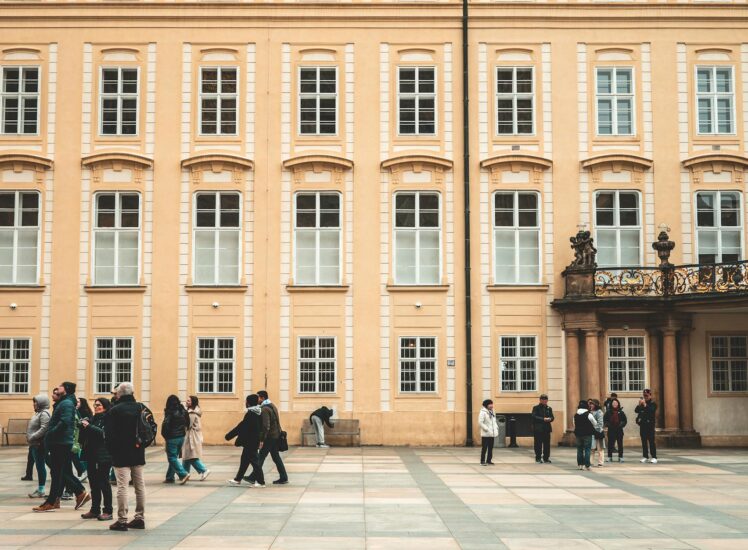
Prague City Tour 2026: Private Half-Day & Full-Day Options
Private Prague city tour in 2026: half-day or full-day options with an expert local guide. Discover Old Town, Charles Bridge and Prague Castle at your own pace.
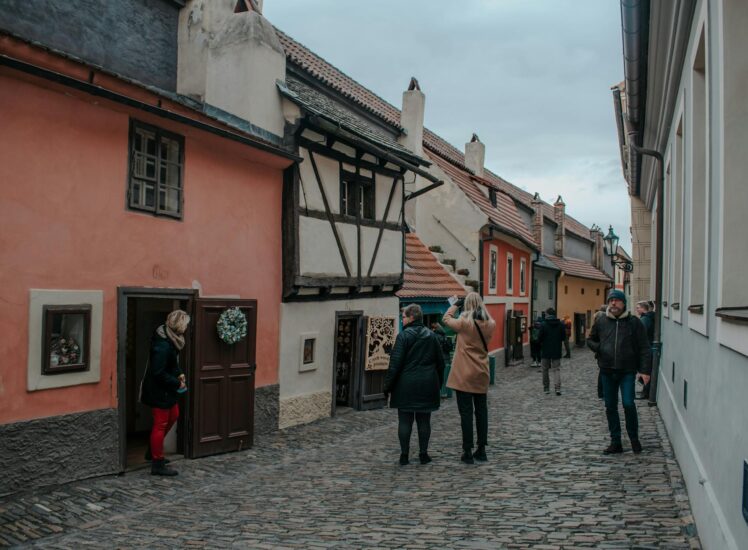
Prague Private Tour 2026: Book a Local Expert Guide
Book a private tour of Prague with a local expert guide. Flexible itineraries, half-day or full-day, tailored to your group. Explore Prague your way in 2026.
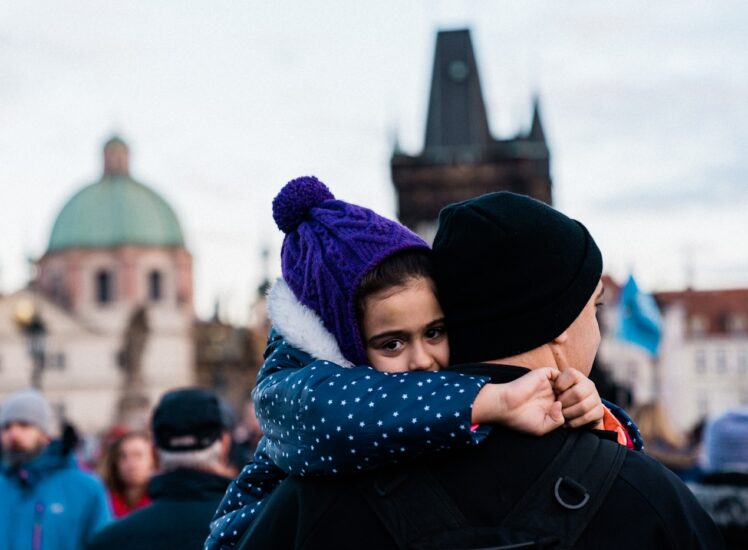
Prague with Kids: Family-Friendly Guide 2026
Planning Prague with kids? Local guide tips on best family attractions by age group, logistics, day trips and what to skip. Private tours from €86/person.
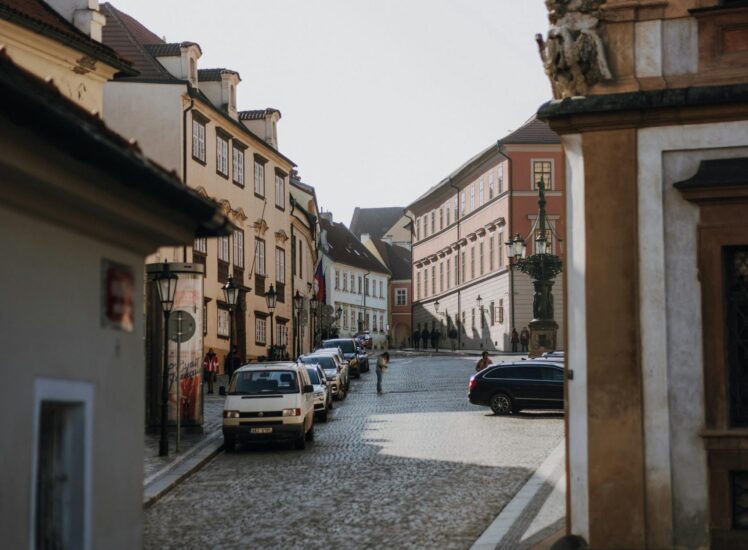
Prague Multi-Day Tours: Private 2–5 Day Itineraries & Experiences (2026)
Plan your Prague trip with a private guide over 2 to 5 days. City highlights, hidden neighbourhoods, and Bohemian day trips built around your schedule.
Dan Brown’s Prague: Secret of Secrets Locations — Literary Walk Guide
Walk 8 Prague locations from Dan Brown's The Secret of Secrets — Klementinum, Charles Bridge, Jewish Quarter and more. Literary walking guide.
