

⏱ Reading time: 12 minutes
What if one day trip from Prague could give you two UNESCO World Heritage Sites — both extraordinary, both largely unknown to international tourists, and both utterly unlike anything in the capital? That’s exactly what a Telč and Třebíč day trip from Prague delivers: a Renaissance jewel of a town square and one of Central Europe’s most moving Jewish heritage sites, all within a comfortable two-hour drive of the city.
Telč and Třebíč sit just 28 kilometres apart in the Vysočina region of southern Moravia, making them a natural pair for a private day trip from Prague. Neither receives the crowds of Český Krumlov or Kutná Hora, which means you often have these extraordinary places almost to yourself — a genuine rarity in the world of European heritage tourism.
This guide covers everything you need to plan your UNESCO double day trip: what makes each town special, the best itinerary to see both comfortably, how to get there, and why a private tour gives you the most rewarding experience.
Plan your Telč & Třebíč private day trip
Why Telč & Třebíč make the perfect day trip pair
Both towns were inscribed on the UNESCO World Heritage List — Telč in 1992, Třebíč in 2003 — for entirely different reasons, which is part of what makes combining them so compelling.
Telč is an architectural set-piece: a Renaissance town whose central square has barely changed since the 17th century, its colourful arcaded houses reflected in surrounding fish ponds. It is the kind of place that makes you feel you’ve stepped through a portal into another century.
Třebíč is an emotional counterpart: a town where the medieval Jewish Quarter survives almost intact, with its synagogues, lanes and extraordinary cemetery serving as a testament to a centuries-old community and its tragic fate. The adjacent Basilica of St. Procopius adds another layer, representing the interplay of Romanesque and early Gothic architecture rarely found in such excellent condition.
Together, they offer a day of remarkable breadth: beauty, history, reflection and the quiet satisfaction of discovering places that most visitors to the Czech Republic never find.
Telč: the UNESCO Renaissance square
Approaching Telč for the first time is a near-theatrical experience. The town rises from a flat landscape like a stage set — a perfectly composed collection of gabled rooftops, Baroque church towers and Renaissance facades, all hemmed in by artificial fish ponds that serve as a shimmering moat around the historic centre.
The historic square
The heart of the town is Zachariáš of Hradec Square (náměstí Zachariáše z Hradce), named after the 16th-century nobleman who transformed Telč from a medieval Gothic town into a Renaissance showpiece after a devastating fire in 1530. Zachariáš hired Italian architects from Genoa, and the result — dozens of uniformly arcaded houses painted in a palette of cream, ochre, pink and pale blue — is one of the most photographed town squares in the Czech Republic.
Walking beneath the arcades, you encounter a procession of house facades, each subtly different from its neighbours: some with lunette gables, some with attic parapets, some with rusticated Renaissance pillars. The arcade walkway stretches the full length of the square and beyond, sheltering pedestrians regardless of weather. At the far end stands the castle, its gardens and ponds completing the composition.
Telč Castle
Telč Castle (Státní zámek Telč) is one of the finest Renaissance residential castles in Central Europe. The same Italian architects who created the square also designed the castle’s magnificent halls, and the interiors — particularly the Golden Hall with its elaborate painted coffered ceiling — are extraordinary examples of 16th-century decorative craftsmanship.
Guided tours (Route A and Route B) lead through staterooms, painted corridors and the chapel, offering a vivid picture of aristocratic life in Renaissance Moravia. The castle gardens, laid out along the fish ponds, provide a peaceful finale to the visit.
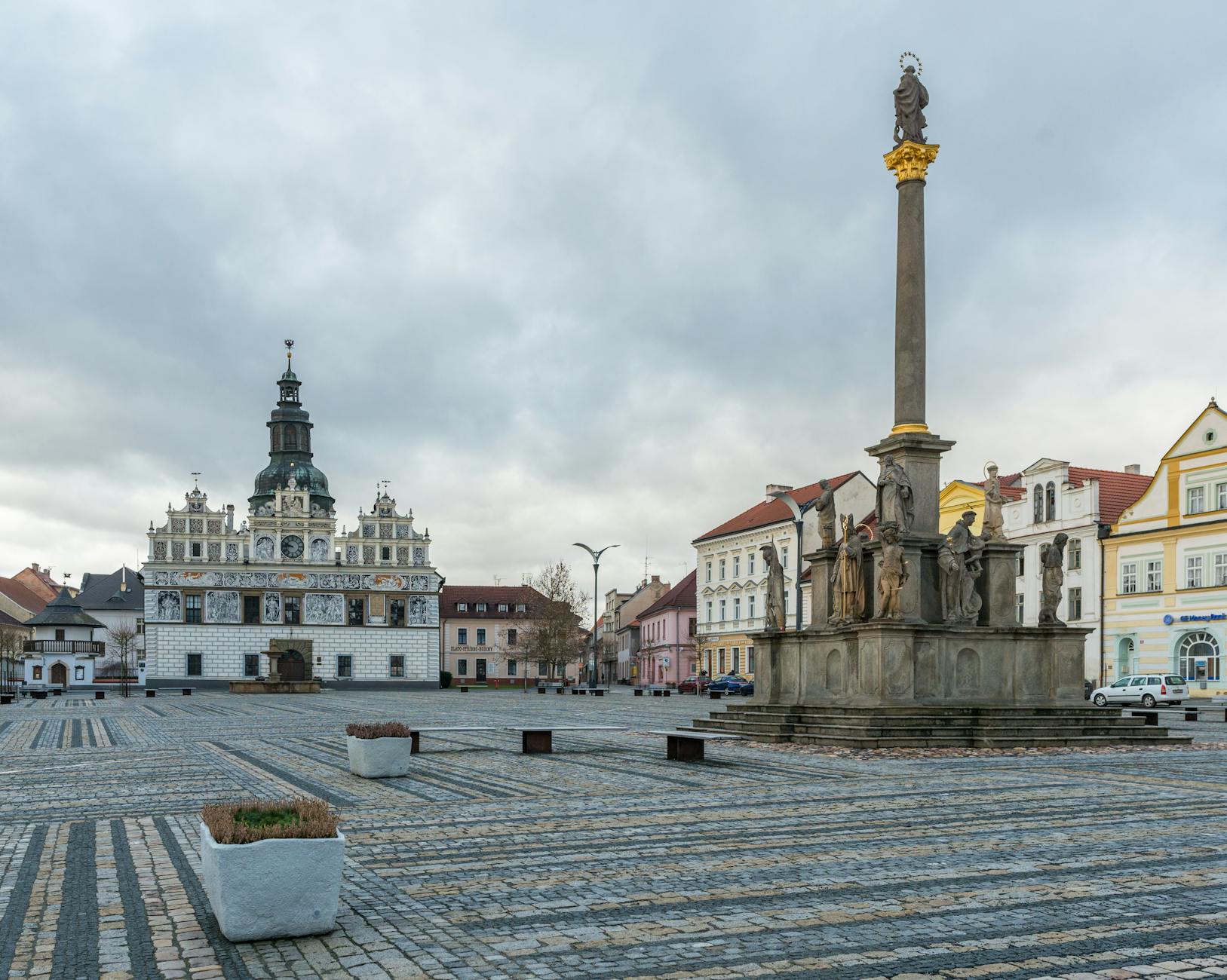
The UNESCO-listed arcaded square of Telč — one of the most beautiful Renaissance ensembles in Central Europe
Třebíč: the Jewish Quarter & Basilica of St. Procopius
Thirty kilometres northeast of Telč, the town of Třebíč presents a completely different kind of UNESCO heritage — quieter, more sombre, and arguably more moving.
The Jewish Quarter
The Jewish Quarter of Třebíč (Třebíčské židovské město) is one of the most intact Jewish settlements in Central Europe. Jews first settled here in the 13th century, and by the 18th century Třebíč had one of the largest Jewish communities in Moravia.
What survives today is a remarkable urban ensemble: the Rear Synagogue (Zadní synagoga), now a museum of Jewish history with a permanent exhibition on Jewish traditions and the community’s fate in the Holocaust; a network of narrow lanes with original 17th and 18th-century residential buildings; and the extraordinary Jewish Cemetery.
The cemetery, spread across a hillside above the quarter, contains over 11,000 gravestones spanning six centuries, making it one of the largest Jewish cemeteries in Central Europe. The atmosphere is deeply affecting — row upon row of weathered stone markers bearing Hebrew inscriptions, surrounded by mature trees. It is an unforgettable place.
The Basilica of St. Procopius
UNESCO’s joint inscription of Třebíč covers not only the Jewish Quarter but also the Basilica of St. Procopius, one of the most significant examples of Romanesque-Gothic transitional architecture in Central Europe. Built between 1240 and 1280 as part of a Benedictine monastery, the basilica’s crypt is among the finest preserved Romanesque interiors in the Czech Republic.
The combination of the Jewish Quarter below and the basilica on the hill above symbolises the peaceful coexistence of two faith communities over centuries — the core of UNESCO’s reasoning for the joint inscription.
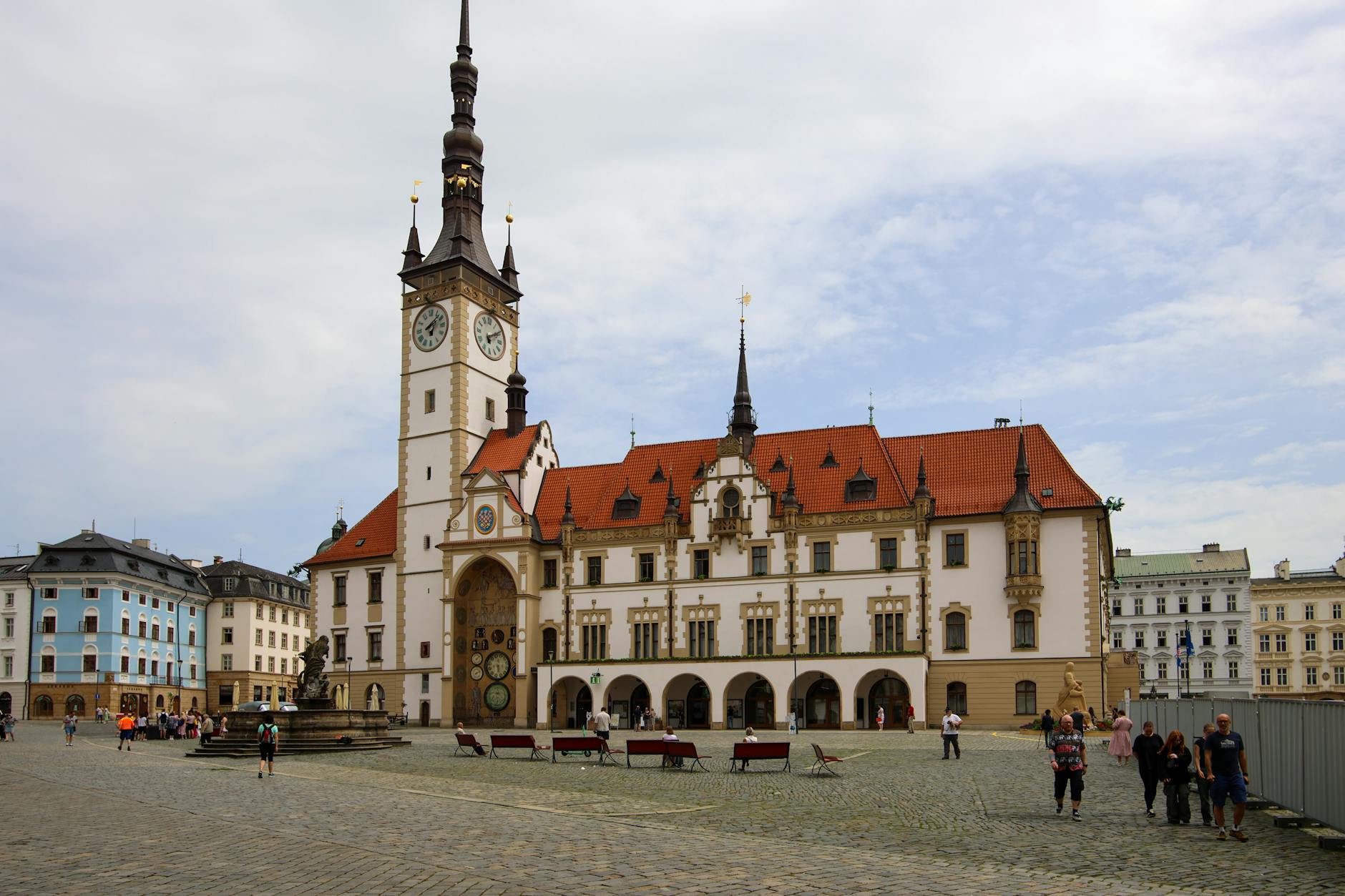
The medieval Jewish Quarter of Třebíč — one of the best-preserved examples of Jewish urban heritage in Central Europe
Getting from Prague to Telč & Třebíč
Both Telč and Třebíč are located in the Vysočina region, approximately 150–165 km southeast of Prague along the D1 motorway. Here’s how to reach them:
| Transport | Prague → Třebíč | Prague → Telč | Comfort |
|---|---|---|---|
| Private car / tour | ~2 hours | ~2.5 hours | ⭐⭐⭐⭐⭐ Best for combining both towns |
| Train to Třebíč | ~2.5 hrs (direct) | No direct service | ⭐⭐⭐ Train to Třebíč only; Telč requires bus |
| Bus to Telč | — | ~3 hrs via Jihlava | ⭐⭐ Slow, one town only |
Public transport makes visiting both towns in a single day extremely challenging — buses and trains simply don’t connect Telč and Třebíč efficiently. A private day trip from Prague is the only practical way to visit both UNESCO sites comfortably, with time to explore properly at each location rather than rushing between connections.
The Telč chateau reflected in the surrounding pond — a scene that has remained virtually unchanged since the Renaissance
Full-day itinerary: Telč & Třebíč from Prague
Třebíč first (recommended — then end at Telč)
Depart Prague 7:30 a.m. → arrive Třebíč ~9:30 → Jewish Quarter walking tour + Rear Synagogue (1.5 hrs) → Jewish Cemetery (45 min) → Basilica of St. Procopius (30 min) → lunch in Třebíč → drive to Telč (35 min) → Telč historic square (1 hr) → Telč Castle guided tour (1–1.5 hrs) → evening stroll along the arcades → depart 6:30 p.m. → back in Prague ~8:30 p.m.
Telč first (ideal for morning photography of the square)
Depart Prague 7:00 a.m. → arrive Telč ~9:15 → historic square at golden hour (1 hr) → Telč Castle guided tour (1.5 hrs) → castle gardens → lunch in Telč → drive to Třebíč (35 min) → Jewish Quarter & Cemetery (2 hrs) → Basilica (30 min) → depart 5:30 p.m. → back in Prague ~7:30 p.m.
We recommend the Telč-first option for photographers — the arcaded square catches superb light in the late morning before the tour coaches arrive around noon. Your private guide can advise on the best timing for your interests.
Practical tips for your visit
Season: Both towns are open year-round, but April through October is the optimal window. Telč Castle is closed November–March (with limited winter openings). Spring brings flowers in the castle gardens; summer is lively but with some tour groups; autumn offers beautiful colours around the fish ponds.
Telč Castle tickets: Tours run every 30–60 minutes. On peak summer days, time slots can fill up — pre-booking is advisable. Route A (state rooms) takes ~1 hour; Route B (different wing) is similar length. Both are worthwhile if you have time.
Třebíč Jewish Quarter: Entry to the Jewish Cemetery and Rear Synagogue museum requires a ticket (approx. 120–150 CZK/adult in 2026). The quarter’s streets are freely accessible at all times.
Dining: Both towns have good local restaurants in the historic centres. Telč has a few cafés on the arcaded square itself — perfect for a break between the castle and your drive to Třebíč. We recommend booking lunch ahead on summer weekends.
What to wear: Comfortable walking shoes are essential — both historic centres involve cobbled streets and uneven surfaces. The Jewish Cemetery in Třebíč has some uphill paths. Light layers are recommended, as Moravia’s inland location can mean cooler evenings even in summer.
Book your Telč & Třebíč private tour
More private day trips from Prague
You might also enjoy
- Český Krumlov Day Trip from Prague 2026 — UNESCO fairy-tale town with castle, river and medieval atmosphere
- Mariánské Lázně Day Trip from Prague 2026 — grand spa heritage and Bohemian elegance in a mountain valley
- Adrspach Rocks Day Trip from Prague 2026 — towering sandstone formations and emerald lakes in Bohemia’s northeast
Editorial verification: Renaissance square access, basilica hours, and Jewish Quarter visitor information reflect 2026 season.
Authoritative sources used:
Frequently Asked Questions
How far are Telč and Třebíč from Prague?
Are both Telč and Třebíč UNESCO World Heritage Sites?
What is the main square of Telč like?
What should I see in Třebíč?
Is combining Telč and Třebíč in one day realistic?
Are these destinations crowded with tourists?
Related articles
American Airlines Prague Philadelphia 2026: Your Complete Prague Guide
American Airlines now flies direct from Philadelphia to Prague from May 21, 2026. Complete guide: private tours, top sights, and best day trips from Prague.
All 16 Czech Republic UNESCO World Heritage Sites — Complete Guide
Complete guide to all 16 Czech Republic UNESCO World Heritage Sites — day trips from Prague, travel times, and honest advice on which are worth visiting.
Prague Tours from the USA 2026: Complete Guide for American Travelers
Planning your first Prague tour from the USA? This guide covers what American travelers need: flight tips, tour options, seasonal advice, and what to expect from a private guide.
Prague City Tour 2026: Private Half-Day & Full-Day Options
Private Prague city tour in 2026: half-day or full-day options with an expert local guide. Discover Old Town, Charles Bridge and Prague Castle at your own pace.
Prague Private Tour 2026: Book a Local Expert Guide
Book a private tour of Prague with a local expert guide. Flexible itineraries, half-day or full-day, tailored to your group. Explore Prague your way in 2026.

Prague with Kids: Family-Friendly Guide 2026
Planning Prague with kids? Local guide tips on best family attractions by age group, logistics, day trips and what to skip. Private tours from €86/person.
Prague Multi-Day Tours: Private 2–5 Day Itineraries & Experiences (2026)
Plan your Prague trip with a private guide over 2 to 5 days. City highlights, hidden neighbourhoods, and Bohemian day trips built around your schedule.
Dan Brown’s Prague: Secret of Secrets Locations — Literary Walk Guide
Walk 8 Prague locations from Dan Brown's The Secret of Secrets — Klementinum, Charles Bridge, Jewish Quarter and more. Literary walking guide.
